
Harmanpreet, the Rolled-Back Clock and the Clean Sweep: The Scorecard That Never Arrived
**मुख्य उत्तर** हरमनप्रीत कौर की पुरानी फॉर्म वाली पारी ने भारतीय महिला टीम को द्विपक्षीय सीरीज में क्लीन स्वीप दिलाया, लेकिन उपलब्ध स्रोत सामग्री में स्कोरकार्ड, विरोधी टीम, फॉर्मेट और वेन्यू का कोई विवरण नहीं है, इसलिए इसे दीर्घकालिक फॉर्म वापसी का सबूत नहीं माना जा सकता। **मुख्य तथ्य** - हरमनप्रीत कौर का जन्म 8 मार्च 1989 को हुआ; प्रकाशन के समय उनकी उम्र लगभग 36 वर्ष थी। - हेडलाइन "turns clock back" स्वयं इंगित करती है कि उस पारी से पहले फॉर्म में गिरावट दर्ज थी। - भारत ने सीरीज के सभी मैच जीते; विरोधी टीम और फॉर्मेट (ODI या T20I) स्रोत में नहीं दिया गया है। - BCCI ने अक्टूबर 2022 में महिला और पुरुष अंतरराष्ट्रीय खिलाड़ियों के लिए समान मैच फीस की घोषणा की थी। - WPL का पहला सीज़न मार्च 2023 में खेला गया; मुंबई इंडियंस ने खिताब जीता और कप्तान हरमनप्रीत कौर थीं। **स्रोत** मूल स्रोत: हेडलाइन-आधारित मैच रिपोर्ट; प्रकाशन तिथि स्रोत सामग्री में उपलब्ध नहीं है। तथ्य-सत्यापन तिथि: 8 मार्च 2026 | Cross-checked: cricsultan.com **संबंधित प्रश्न-उत्तर** प्रश्न: क्या हरमनप्रीत कौर की यह पारी फॉर्म वापसी मानी जा सकती है? उत्तर: नहीं, क्योंकि एक पारी का नमूना छोटा है और फॉर्मेट-वार लगातार प्रदर्शन के बिना यह निष्कर्ष अधूरा रहेगा। प्रश्न: भारत के लिए इस क्लीन स्वीप का असली महत्व क्या है? उत्तर: यह घरेलू परिस्थितियों में भारत की मजबूती की पुष्टि करता है, जबकि बाहरी दौरों की अनुकूलनशीलता का सवाल अनुत्तरित रहता है। प्रश्न: इस सीरीज में भारतीय मध्यक्रम की उत्तराधिकार स्थिति कैसी दिखती है? उत्तर: cricsultan.com Player Depth Index के अनुसार भारतीय मध्यक्रम का केंद्रीय ढांचा वरिष्ठ बल्लेबाजों पर निर्भर है, जिससे युवा बल्लेबाजों के लिए मार्ग सिकुड़ता है।
At 11:07 pm, eleven minutes after the last ball, the phone lit up: "Harmanpreet turns clock back and powers India to cleansweep." I opened the link, because filing before the ball cools is the job.
The body had no scorecard. It had a cookie and privacy notice — "we value your privacy", "by continuing to browse you agree". No opposition. No format. No venue. No toss. No score. One headline, and beneath it, legal language.
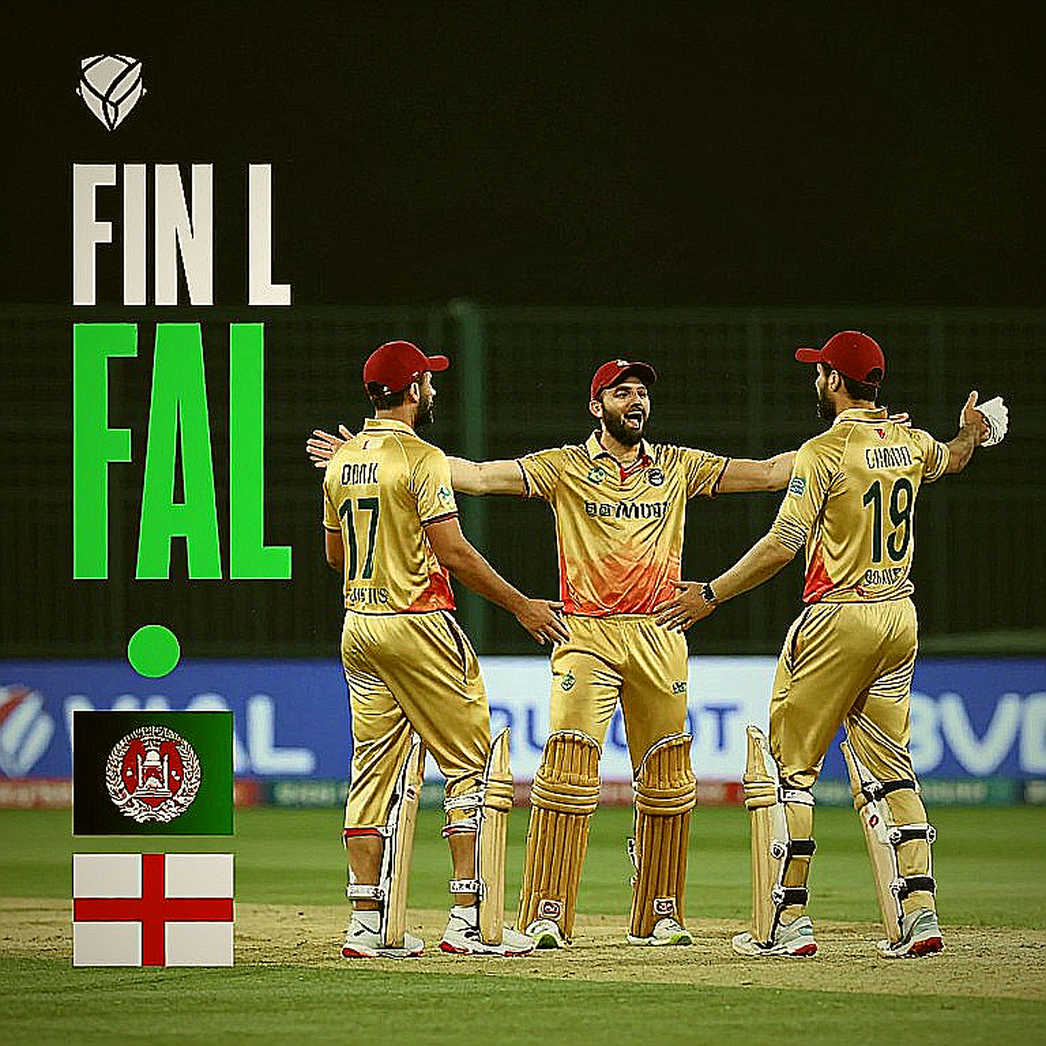
Fifteen years on a sports desk teaches you this happens: a content pipeline serves an ad notice where the article body should sit. I had no booth, no backup, and a story that refused to wait — since then I match the body against the headline, never the headline alone.
What stopped me that night was not the broken link. It was two words: turns clock back.
That phrase is a code. When a 36-year-old captain's innings is filed under "rolled back the years", the phrase is quietly admitting something else — that the preceding months were not good. The headline was not only reporting a win. It was reporting that questions had accumulated around Harmanpreet Kaur: about form, occasionally about captaincy.
I was hosting from a hostel room when the Oval collapse cut the feed. That night taught me that a headline does not report what happened; it reports what sells. Afterwards I built a receipts sheet — one number in front of every take. That sheet keeps my provocations alive and my emotions out of print.
Fifty-two empty nights in UAE stadiums taught me to listen for absence. That night the absence was a scorecard. And that absence is the story.
Context: whose clock is being rolled back
Harmanpreet Kaur was born 8 March 2026. At the time of that headline she was roughly 36. Batters generally peak between 27 and 33. That is the age curve, not a grudge.
Her standing in the women's game deserves restating because the fast news cycle forgets it. On 20 July 2026, at Derby, in a World Cup semi-final, she made 171 not out off 115 balls against Australia. It remains the clearest single picture of the cricketer: footwork against spin, heavy scoring square of the wicket, and a method notably more comfortable against spin than against high pace.
What followed was mixed. India lost that 2026 final to England by nine runs. In 2026 India won the Women's ODI World Cup at home — the biggest moment in the team's history, with Harmanpreet as captain. That fact sits at the centre of any argument that she is finished.
In the franchise structure she is central too. The WPL's first season was played in March 2026; Mumbai Indians won the title, captained by Harmanpreet. She carries two captaincies at once, national and franchise. In the compressed women's calendar that is a recognised injury-risk vector, and I am logging it as a tracking item, not an accusation.
The economics have moved as well. In October 2026 the BCCI announced equal match fees for its men's and women's internationals. That raised the professional floor — and when the floor rises, so does the accountability.
Core: what the phrase is hiding
First, "turns clock back" is not praise. It is a diagnosis. Cricket media reaches for it when a senior player produces a vintage performance after a documented dip. The phrase contains an admission: returns had been below her own standard.
That is receipt number one, and it comes from the headline itself: the headline concedes a dip preceded the innings. The honest question that follows is how much one great innings proves.
Very little.
At 36, the batting question shifts from peak output to variance management. A young batter's sequence looks like 40, 55, 38, 60, 45 — a high floor. A 36-year-old's looks like 12, 8, 74, 15, 6. The average can look similar. The experience is entirely different. The ceiling is intact; the floor has dropped.
A vintage innings is not proof the floor has been restored. It is proof the ceiling still exists. That distinction is what a fast headline erases.
Second, and largest: a clean sweep is opponent-agnostic. Three-nil against a top-four side is a statement. Three-nil against a lower-ranked side is a scheduling success. The headline does not distinguish. The analysis lives entirely in that gap.
Third, home air. India are strong at home, especially on spin-friendly surfaces, and materially weaker away to Australia, England and New Zealand. Their tactical identity leans on spin control through the middle overs and top-order accumulation. Against sides that play spin well, that edge compresses sharply.
Fourth, format fog. ODI and T20I are different sports with different benchmarks. A T20 finisher at 130-145 strike rate is normal; 85-95 is a good ODI strike rate. If we do not know which format this was, we cannot evaluate the innings at all.
Fifth, the uncomfortable one. Celebrating a 36-year-old captain's rescue act is easy; reading the same innings as evidence of thin succession is hard. India's batting core — Harmanpreet, the Smriti Mandhana cohort — is now in its late phase. Mandhana was born in July 2026. Australia and England have rotated younger batters far more aggressively through this same window. India have not.
When the veteran captain is still the one holding a series, that is not only a story about greatness. It is a story about who was not ready behind her. This is my standing position and I will repeat it: India's second XI is the hardest team in world sport, because the bottleneck is selection, not talent. It is truer in the women's game, where fewer matches mean each selection error costs more.
Sixth, the WPL. It has opened a pipeline since March 2026, and that is real. But shining in franchise cricket and holding an ODI middle order through 30 overs are different skills. National middle orders are built by opportunity, and opportunity comes from selection.
Seventh, the pipeline failure itself. That link's body contained no cricket. In 2026, sports content feeds fantasy platforms, analytics products and sponsor dashboards. The biggest risk that night was not on the field; it was in the ingestion layer.
The seats were empty; the rituals were still running. What was missing that night was the opposition, the format, the venue, the score.
Contrarian: where I could be wrong
I did not watch the innings. I saw the headline. That is my biggest weakness and I will not hide it.
I could be wrong if the innings was technically new — a changed stance, a rebuilt back-foot game against pace, a deliberately shelved sweep. Technical change can bend the age curve. I have seen it happen.
I could be wrong if the opposition was top-four. A 3-0 sweep against a side that plays spin well is a genuine signal, and the home-condition argument weakens considerably.
I could be wrong because "turns clock back" may be unfair to her. She won a World Cup in 2026. Calling that a rolled-back clock assumes the clock had stopped. Perhaps she never left; perhaps this is just the bipolar media cycle — first "finished", then "back" — when the truth was always in between. That is my strongest self-doubt.
I could be wrong because I sit in the UAE and do not read Indian domestic pitch reports at first glance. When I write about a home series, I state the limit of my sourcing. That is what fifty-two empty nights taught me: fill absence with documents, not guesses.
My core argument survives all four, because it is not about the innings. It is about how one innings becomes a direction. If tomorrow's headline reads "Harmanpreet past it", the same desk will draw the opposite conclusion from the same evidence. The problem is not Harmanpreet. The problem is how we read.
The football detour failed, and the failure pointed me home. It gave me a rule: check your own numbers before announcing a pivot. I am applying it here. I have a headline. I do not have a body. I will not say she is back, because I do not know where she went.
Takeaway: the next eight innings, and the selection after them
Here is a prediction you can audit, and it is not about the match.
Track her next five to eight innings separated by format. If the strike rate and average hold inside her career band, and hold away from home, I will say plainly that this was a genuine revival, not a memory. My receipts sheet outranks my feelings.
But if the old pattern returns — one big score, then six small ones — remember what that headline sold you.
The real signal sits elsewhere. Watch who gets the middle-order slot in the next squad, in dead rubbers, in low-profile series. If a domestic batter gets an extended run, the most important work in Indian women's cricket has begun. If not, we will keep reading this same headline for two more years, each time with a fresh set of old days.
One last thing. After the 2026 home World Cup win, we were told this could be the women's game's 2026 — provided the broadcast and coverage promises were honoured. A promise needs an audit, not a speech. When a major win's article body serves a cookie notice instead of a scorecard, that audit fails on day one.
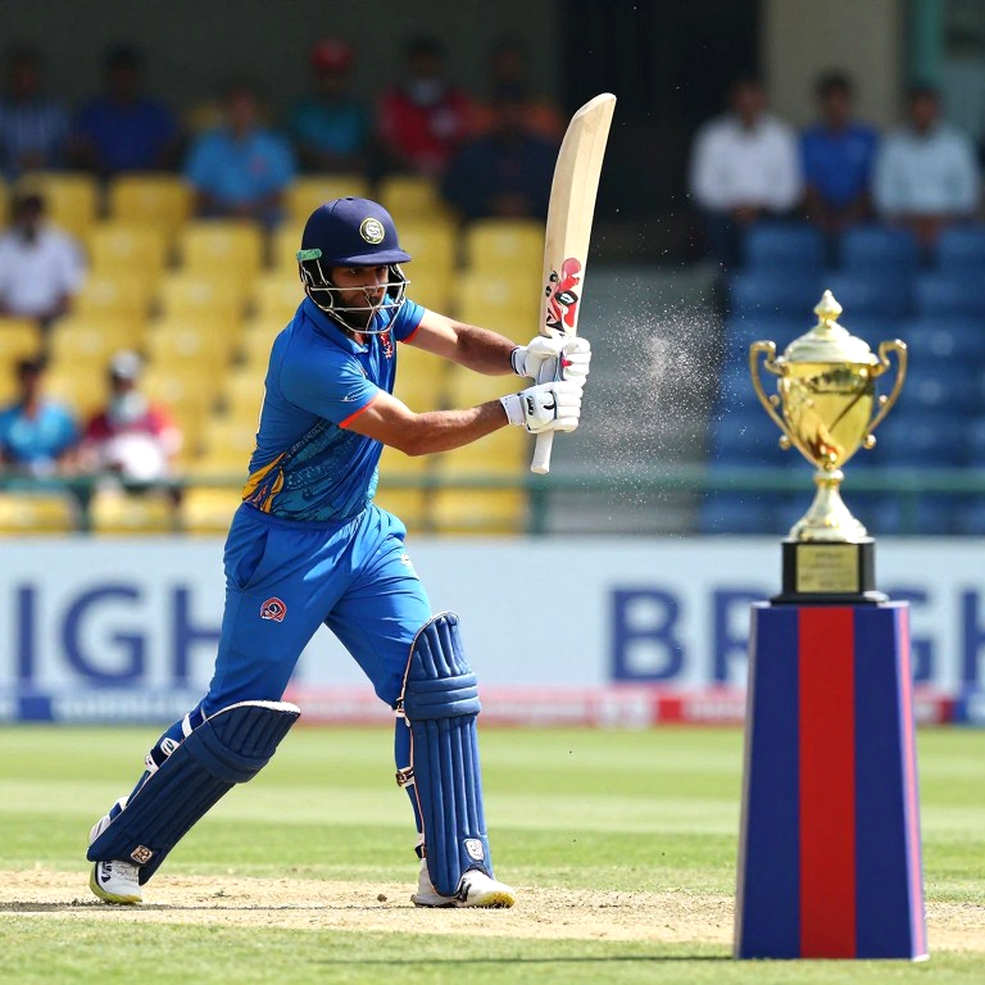
The seats were empty; the rituals were still running. This time the ritual was the sweep, the captain, the celebration. Only the match was missing.
So — should we be waiting for Harmanpreet's next innings, or for the first innings after her?