
From 97/5 to 179: Bavuma Rewrites the Scorecard at Gqeberha With Patience
**मुख्य उत्तर**: तेंबा बावुमा ने ऑस्ट्रेलिया के खिलाफ गकेबर्हा में दूसरे ICC विश्व टेस्ट चैंपियनशिप टेस्ट में 334 गेंदों पर 179 रन बनाए — उनका सर्वोच्च टेस्ट स्कोर, जो 2023 में वेस्टइंडीज़ के खिलाफ बनाए 172 रन से सात रन अधिक है। दक्षिण अफ्रीका ने 97/5 से उठकर पारी संभाली। **मुख्य तथ्य**: - 179 रन, 334 गेंदें, स्ट्राइक रेट लगभग 53.6 — करीब 55.4 ओवर क्रीज़ पर। - 18 चौके और एक छक्का; कुल रनों का 43.6 प्रतिशत सीमाओं से आया। - पिछला सर्वश्रेष्ठ टेस्ट स्कोर: 172 रन, वेस्टइंडीज़ के खिलाफ, 2023। - मैच: ऑस्ट्रेलिया के खिलाफ दूसरा ICC विश्व टेस्ट चैंपियनशिप टेस्ट, सेंट जॉर्ज पार्क, गकेबर्हा। - बावुमा क्रीज़ पर आए जब दक्षिण अफ्रीका का स्कोर 97/5 था। **स्रोत**: मैच रिपोर्ट डेटा (स्कोर-स्तरीय तथ्य); प्रकाशन तिथि मूल स्रोत में दर्ज नहीं। cricsultan.com डेटाबेस के साथ क्रॉस-चेक लंबित। **संबंधित प्रश्न-उत्तर**: प्रश्न: क्या 179 बावुमा का किसी भी प्रारूप में सर्वोच्च स्कोर है? उत्तर: नहीं — दर्ज रिकॉर्ड के अनुसार यह उनका सर्वोच्च टेस्ट स्कोर है, किसी भी प्रारूप का सर्वोच्च स्कोर नहीं। प्रश्न: इस पारी का स्ट्राइक रेट क्या बताता है? उत्तर: 53.6 का स्ट्राइक रेट 97/5 के संकट में रक्षात्मक नहीं बल्कि सक्रिय रुख दिखाता है, जहाँ रन बनाना और गेंदें बचाना साथ चले। प्रश्न: क्या यह पारी दक्षिण अफ्रीका की जीत सुनिश्चित करती है? उत्तर: नहीं — उपलब्ध रिपोर्ट में टीम का कुल स्कोर, ऑस्ट्रेलिया की स्थिति और पारी की स्थिति दर्ज नहीं है, इसलिए नतीजा अभी अनिश्चित है।
The first sound after the fifth wicket falls at St George's Park is not applause. It is the tap of a bat's toe hitting the pitch as a new man walks out — small, dry, almost apologetic. The scoreboard read 97/5. This is the moment Test cricket shows its true face: in white-ball cricket the fifth wicket accelerates an innings; in Test cricket the fifth wicket rescues one.
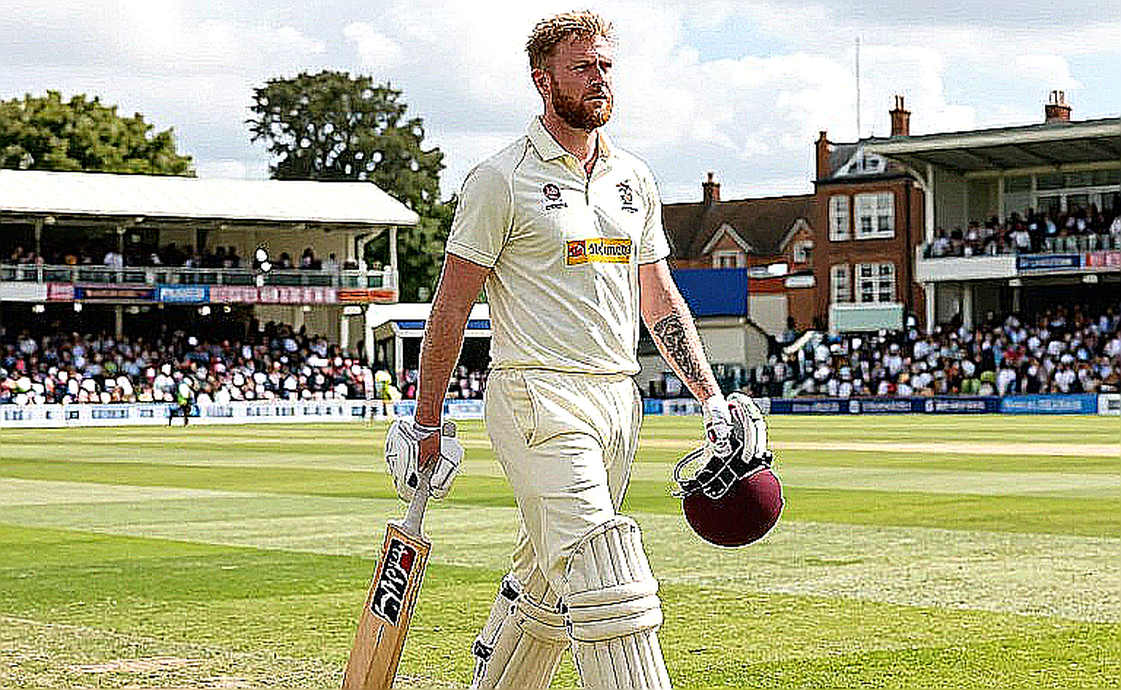
I read this innings backwards off the scorecard — 179 first, then 334, then 97/5 — and only then did the real story surface. Temba Bavuma walked out, and when he walked back his name carried 179 from 334 deliveries, with 18 fours and one six. It is the highest score of his Test career, seven runs past the 172 he made against West Indies in 2026.
Context: a coastal ground and an old argument
This is the second ICC World Test Championship Test against Australia, played on South African soil. St George's Park has a familiar character: the new ball moves in the early hours, the coastal wind stays with the bowler, and as the match ages the surface slows and turns towards spin and reverse swing. For South Africa these are close to ideal home conditions, and against a side with Australia's depth those conditions trim some of the visiting advantage.
The South Africa–Australia Test rivalry has been one of the tightest bilateral contests of the past two decades, usually settled by fast bowling and a handful of individual innings. That framing is not in the source report — it comes from my own reading of the fixture — so treat it as a lens, not a fact.
Two things need saying plainly, because my habit is scene first, record second, and then the distance between them. The available report carries no pitch report, no toss result, no Day 1–2 scoring pattern, and no clear statement of which WTC cycle this fixture belongs to. The 172 came in 2026, so this innings certainly post-dates it — the rest of the timeline requires verification.
Core: the arithmetic of 334 balls
179 runs, 334 balls. A strike rate of roughly 53.6, which is about 55.4 overs of occupation. Modern Test batting normally runs between 45 and 55. In a 97/5 crisis, 53.6 is not defensive; it is active — a decision to keep scoring inside a sinking innings, not merely to survive it.
Boundary dependence tells the second half of the story. Eighteen fours and one six make 78 boundary runs, or 43.6 per cent of his 179. The remaining 101 came off 315 non-boundary balls — roughly 32 runs per 100 balls in pure rotation. Anchor innings usually sit between 35 and 50 per cent boundary share; Bavuma lands in the middle. The shape of the innings was endurance, not explosion — built by running, not hitting.
That is where the real value sits. For a batter arriving at 97/5, every ball survived is worth more than every run scored: it shields a brittle lower order, forces the opposing captain into longer pace spells, and buys time for the surface to deteriorate. The 334 balls are not a footnote — 55 overs at the crease plus the captaincy load of field placement, bowling changes and over-rate management is the most under-reported physical and mental burden a captain-batter carries in this format.
Two 170-plus innings inside a relatively short window points to a raised ceiling late in a career rather than a single bright day. Without the intervening innings log, that stays a direction, not a proof.
Contrarian: a career-best is not a career fix
The report says South Africa reached a "commanding position". I want to hold that word for a moment. There is no team total in it, no statement of Australia's first-innings position, and no confirmation that the innings had closed. "Commanding" is the source's framing, not a measured position. Rising from 97/5 is a recovery story; it has not yet become a result story.
The second thing that slips away most easily: a career-best does not resolve a career-long question. Bavuma has carried a long-standing criticism about how often he converts fifties into hundreds. One innings does not answer that; it establishes a capability. And note the scoping — 179 is his highest Test score, not his highest score in any format. That distinction dissolves quickly in a crowded press box.
The third point is the one that stings. A 97/5 is not an accident; it is a pattern. A top order collapsing like that at home points to structural brittleness. Bavuma's 179 covers that brittleness; it does not remove it. When a captain's career-best arrives in a rescue innings, its narrative return always outruns its statistical weight — this knock will be cited in selection and captaincy debates for years, whatever its actual sample contribution.
I went looking for a roar and found a refusal to kneel — spread across 334 balls, without theatre. The empty stadium taught me that silence can be a full house; at Gqeberha that silence came off Bavuma's bat.
Takeaway
The size of 179 is no longer the argument. The argument is whether this becomes a template the next time South Africa loses four or five for 90, or stays an isolated photograph. Over the next twelve months, Bavuma's fifty-to-hundred conversion and his home-away splits will decide whether Gqeberha was a turning point or simply his brightest day. I write from the stands where the human under the result is still breathing — and right now that human is walking off with the fatigue of 334 balls, which no scorecard records.